Friday
03 July, 2026
News Flash
News Flash
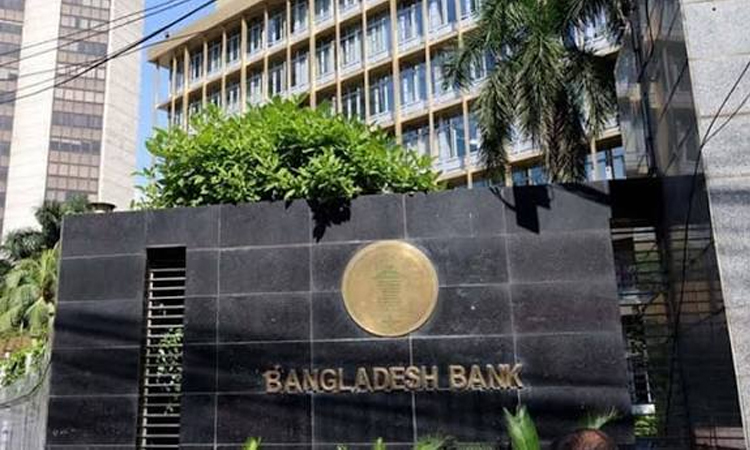
DHAKA, July 2, 2026 (BSS) – Bangladesh Bank (BB) has allowed banks to offer Forward Rate Agreements (FRAs) to importers, introducing a new derivative instrument aimed at protecting businesses from fluctuations in international interest rates on foreign currency import financing.
To this end, the central bank today issued a circular, permitting Authorized Dealers (ADs) to provide FRAs for importers availing suppliers' or buyers' credit under floating interest rates.
The move is expected to deepen Bangladesh's foreign exchange and derivatives market while strengthening financial risk management.
According to the circular, an FRA is a financial contract that enables an importer to lock in an interest rate for a future period without exchanging the principal amount of the loan. Instead, only the difference between the agreed rate and the actual benchmark rate at settlement will be exchanged.
The circular said the instrument is intended solely for hedging genuine underlying import credit exposures. Speculative, leveraged or uncovered transactions have been prohibited to safeguard financial stability.
Settlement under the agreements will be based on the difference between the contracted FRA rate and the prevailing Secured Overnight Financing Rate (SOFR).
The notional principal will not be exchanged, while settlement will be made either in Bangladeshi Taka for domestic obligations or in the relevant foreign currency for international obligations.
Bangladesh Bank stipulated that the notional amount of an FRA must not exceed the outstanding amount of the underlying import credit, and repayment of the original loan will remain separate from the FRA settlement.
Only importers availing permissible usance imports financed through floating-rate suppliers' or buyers' credit will be eligible for the facility.
The tenor of each FRA must correspond to the remaining interest period of the underlying borrowing and remain within the limits prescribed under existing foreign exchange regulations.
To ensure banks do not assume market risk, the central bank has directed Authorized Dealers to execute back-to-back hedge transactions on the same day an FRA is undertaken with a customer.
The circular also capped the pricing spread that banks may charge at a maximum of 10 basis points and limited each bank's outstanding FRA exposure to 25 percent of its average foreign exchange inflows over the previous 12 months.
Bangladesh Bank said these measures are intended to keep hedging costs low for importers while safeguarding foreign exchange market stability.
All FRA transactions must be executed under modified International Swaps and Derivatives Association (ISDA) or equivalent agreements that comply with Bangladesh's legal framework. Each contract must be supported by a detailed term sheet identifying the underlying import exposure, agreed interest rate, tenor, notional amount, settlement mechanism and risk disclosures.
In cases of early termination, contracts must be settled at prevailing market rates, with banks required to maintain proper documentation of the valuation methodology and obtain the importer's written consent.
The central bank has also introduced a two-tier reporting framework. Banks will submit weekly reports containing transaction-level information, including pricing spreads and hedge counterparties, while monthly reports will provide details of outstanding contracts, daily mark-to-market valuations and net gains or losses.
The circular warned that any misrepresentation or inadequate disclosure that results in customer losses may invite regulatory action against the concerned bank and its officials.
Bangladesh Bank further directed banks to adopt board-approved risk management policies, conduct daily mark-to-market valuations in line with international accounting standards, and ensure periodic internal audits covering compliance with KYC, AML and CFT requirements.
The directive also instructed Authorized Dealers to develop the necessary expertise and operational capacity before offering FRA products and to inform their clients about the new guidelines.